

In the pursuit of better sleep, many people focus on immediate comfort. They test a mattress for a few minutes in a showroom, note how it feels in that moment, and assume that initial sensation will translate into years of restful nights. Yet long-term sleep quality is not determined by how a bed feels on day one. It is determined by how it performs over time.
This is where the distinction between handmade beds and mass-produced mattresses becomes clear. Handmade beds are not designed for instant appeal. They are designed for consistency, longevity, and adaptation — qualities that matter far more across months and years than they do in a brief trial.
For discerning homeowners and designers, understanding this difference is essential.
The Problem With Short-Term Comfort
Modern mattress marketing often prioritizes immediate softness or dramatic pressure relief. Many beds are engineered to feel luxurious at first contact, using thick layers of foam or synthetic materials that compress easily under weight.
While this approach can be appealing initially, it often comes at the expense of long-term support. Foams tend to fatigue, retaining impressions and losing resilience. As materials break down, alignment suffers, temperature regulation declines, and comfort becomes inconsistent.
Sleep quality rarely improves under these conditions. In many cases, it quietly deteriorates.
How Handmade Beds Are Different
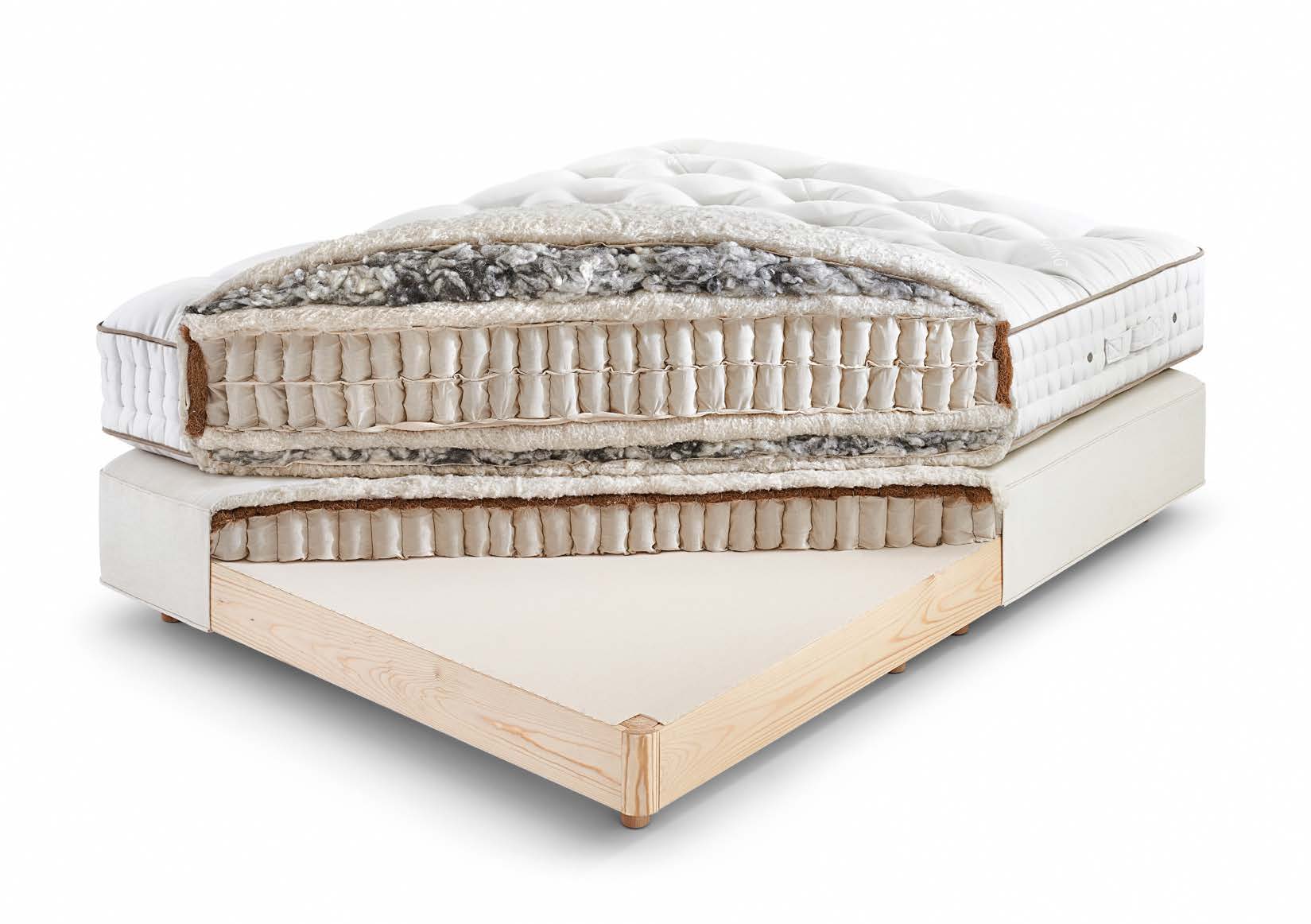
Handmade beds follow a fundamentally different philosophy. Rather than relying on large volumes of synthetic foam, they use layered natural materials and hand-assembled support systems that are designed to flex, breathe, and recover.
Every component plays a role. Springs respond independently rather than uniformly. Natural fillings distribute weight gradually instead of collapsing under pressure. Upholstery is tensioned by hand to maintain structure and stability.
The result is not dramatic softness, but balanced support — a quality that becomes more valuable with time.
Natural Materials and Their Role in Sleep Quality
One of the most important distinctions between handmade beds and mass-produced alternatives lies in material choice.
Natural fibers such as horsehair, wool, cotton, silk, and cashmere behave very differently from synthetic foams. Horsehair, for example, is naturally springy and resilient. It compresses under weight and then recovers fully, even after years of use. It also allows air to circulate freely, preventing heat and moisture from building up during the night.
Wool adds softness and insulation while remaining breathable. Cotton provides stability and structure. When layered thoughtfully, these materials create a sleep surface that regulates temperature, manages humidity, and maintains consistent support.
Synthetic materials, by contrast, often trap heat and degrade predictably. Their comfort profile changes over time, sometimes dramatically.
Consistent Support and Spinal Alignment
Sleep is a dynamic process. People change positions repeatedly throughout the night, placing varying demands on the bed beneath them. For sleep to remain restorative, the mattress must support these movements without forcing the body into compromised alignment.
Handmade beds excel here because of their construction. Individually responsive springs adapt to movement rather than resisting it. Hand-layered fillings distribute pressure evenly, reducing stress on joints and muscles.
Over time, this consistency helps maintain proper spinal alignment, reducing the subtle discomforts that accumulate when support degrades.
Adaptation Rather Than Degradation
One of the most misunderstood aspects of high-quality handmade beds is how they change with use.
Mass-produced mattresses often soften unevenly or lose structure altogether. Handmade beds, when built correctly, do the opposite. They adapt.
Natural materials settle gradually, conforming more precisely to the sleeper’s body. This adaptation enhances comfort rather than undermining it. The bed becomes more familiar, more attuned, and more supportive with time.
This is why owners of handmade beds often describe them as improving over the years rather than wearing out.
Breathability and Sleep Continuity
Temperature regulation plays a critical role in sleep continuity. Overheating can cause micro-awakenings that fragment sleep cycles, even if the sleeper does not consciously wake.
Handmade beds constructed with breathable natural materials promote airflow throughout the mattress. Heat dissipates rather than accumulating. Moisture evaporates rather than lingering.
This creates a more stable sleep environment, allowing deeper, uninterrupted rest — night after night.
Longevity as a Measure of Quality
In luxury homes, longevity is often the clearest indicator of true quality. Furniture, finishes, and materials are chosen not because they are fashionable, but because they endure.
The same principle applies to beds. A handmade bed is not designed for replacement every few years. It is designed to remain relevant, supportive, and comfortable for decades.
For homeowners who value sustainability, wellness, and thoughtful investment, this longevity is not incidental. It is the point.
Why Time Is the Ultimate Test
Sleep quality cannot be evaluated in minutes. It reveals itself over months of consistent rest and years of dependable support.
Handmade beds are built with this long view in mind. They prioritize materials and methods that stand up to use, adapt intelligently, and preserve comfort.
For those seeking better sleep over time — not just an appealing first impression — handmade beds offer a quieter, deeper form of luxury.
At Vispring Orange County, we work with clients who understand that the most important decisions are rarely the loudest. Better sleep is not something that announces itself immediately. It proves itself, night after night, over time.

